


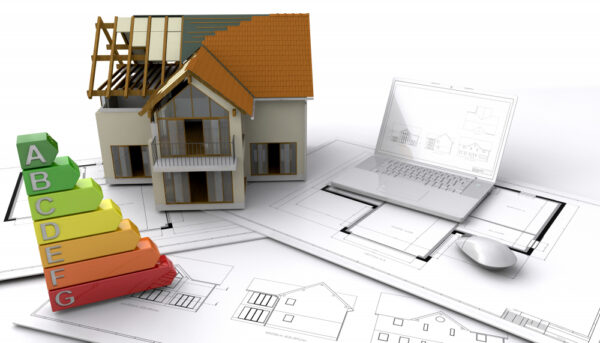
The energy label of your office plays an increasingly larger role in total costs and location choice. What used to be a detail in the small print now directly determines how much you spend annually on operating costs. The difference between an energy-efficient office with an A label and an outdated office with a G label can amount to 15,000 euros per year for a standard office space. This reality forces companies to put energy performance at the center of their housing decisions.
Energy label as a cost item: more than just rent
Since 2021, the Energy Performance Certificate (EPC) has been mandatory for all offices larger than 250 square meters. This certificate indicates with a letter from A to G how energy-efficient a building is. In practice, it turns out that many companies overlook this information when comparing office locations, while the impact on the wallet is significant.
An office with a D label costs on average 3 to 8 euros per square meter per year more in energy than a comparable property with an A label. For an office of 500 square meters, this means 1,500 to 4,000 euros in extra energy costs per year. These amounts come on top of the rental price and can make the difference between a profitable and a loss-making location.
The average energy costs for offices are currently between 40 and 60 euros per square meter per year. An office with an A label comes out at about 25 euros per square meter, while an office with a G label can exceed 80 euros. These differences will only grow larger as energy prices rise and regulations become stricter.
Tightening regulations force action
The government is strongly committed to making the office market more sustainable. From 2030, the average office stock must meet at least energy label D, and from 2033 even label C. Offices with an F or G label are becoming increasingly financially risky. Banks and investors are already becoming more cautious about financing poorly performing properties.
This development leads to a value decline of 10 to 25 percent for offices with a poor energy label. Owners of these properties face a clear choice: invest in sustainability or accept that their property becomes less valuable. For tenants, this means that the availability of affordable office space comes under pressure, especially in regions where the supply of energy-efficient offices is limited.
Regional differences in availability
The availability of energy-efficient offices differs greatly by region. In large cities such as Amsterdam, Rotterdam and Utrecht, the supply of sustainable offices is larger, but these spaces often have a higher rental price. Offices with an A or B label are rented here on average 15 percent more expensively than comparable properties with a D or E label.
In smaller cities and rural areas, the supply of energy-efficient office space is much more limited. As a result, companies wanting to establish themselves outside the Randstad have fewer choices. About 45 percent of the Dutch office stock currently has a D label or worse, which underlines the need for sustainability improvements.
Sustainability as an investment with returns
Investments in sustainability, such as insulation, HR glass and LED lighting, cost between 50 and 150 euros per square meter. These measures pay for themselves in 5 to 8 years through lower energy costs. For tenants, it is therefore important to sign contracts for at least 5 years, so they actually benefit from these savings.
Legally, the responsibility for sustainability improvements lies with the property owner, but in practice this is negotiable. In long-term contracts, tenants can include sustainability measures as a condition in negotiations. Subsidies and financing options through programs such as the SEPP from RVO make investments more attractive, although these are usually only accessible to owners.
Impact of hybrid working on office efficiency
Hybrid working is changing the way companies look at office space. Because fewer workstations are needed per employee, the quality of each square meter becomes more important. Companies increasingly choose smaller but qualitatively better offices with a good indoor climate, good insulation and efficient lighting.
This development increases the importance of energy labels. A comfortable and energy-efficient office contributes to employee satisfaction and productivity. Research shows that 72 percent of professionals prefer an office with an environmental certificate. Sustainable offices are therefore more attractive for attracting and retaining talent.
Practical steps for smart location choice
When searching for a new office location, always actively request the Energy Performance Certificate. This certificate is available through agents and owners. Check the expiration date, as an EPC is valid for a maximum of 10 years. Then calculate the annual energy costs by multiplying the difference between the labels by the number of square meters and the cost per square meter.
Look beyond the current situation and assess whether the property will still meet the regulations in force in 5 to 10 years. For long-term contracts, it is wise to look at the renovation potential. What improvements are possible, who pays the costs and what subsidies are available?
Use this information in contract negotiations. Higher energy costs can justify a lower base rent, or form a reason to ask the owner to invest in sustainability. After moving, keep an eye on actual energy consumption. If this differs significantly from what is stated in the certificate, that can be a reason to talk again.
Outlook: energy label as a decisive factor
The energy label of offices is shifting from a side issue to a main issue in location decisions. Due to stricter regulations, rising energy costs and more attention to sustainability, a good energy label is becoming an important condition for future-proof housing. Companies that already take energy performance into account in their location choice are in a stronger position in the coming years.
The office space market is on the eve of major changes. Poorly performing offices become harder to rent out and decline in value, while energy-efficient properties remain scarce and sought after. By putting the energy label at the center of your search for office space, you make a well-considered choice that pays off in lower operating costs, better financing options and an attractive work environment for employees.


 info@deskfinder.nl