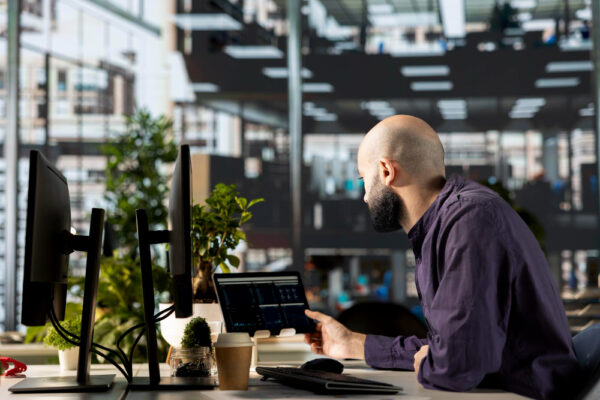


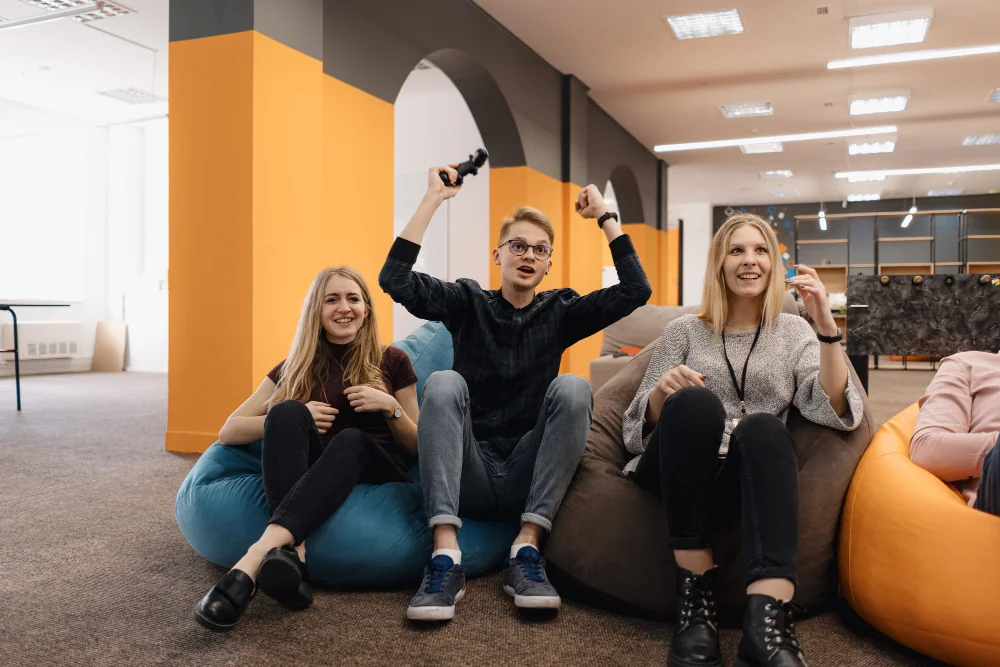
The labour market is tighter than ever. While 62% of SME owners worry about staff shortages, companies are searching for concrete ways to attract and retain talent. A surprisingly effective tool is often right under their noses: office design. Only 51% of employees feel proud enough to bring guests to their workplace. That’s a clear signal that the physical work environment is crucial for engagement and image.
Why office design makes the difference
In 2025, Generation Z and millennials make up 65% of the workforce. These groups have different expectations of their workplace than earlier generations. They value a good work-life balance, sustainability, healthy food and flexibility. A standard office with fluorescent lighting and suspended ceilings simply no longer cuts it for them.
The office is no longer just a place to work, it also shows who you are as an employer. Companies that understand this invest deliberately in well-connected locations near public transport hubs, sustainable buildings with a minimum energy label C, and a thoughtful layout with ergonomic workstations, plenty of daylight and greenery. These choices are no longer a luxury, but basic requirements in the battle for talent.
From hybrid working to considered office solutions
Now that 78% of Dutch companies work hybrid, the role of the office has changed significantly. The office needs to offer value that working from home doesn’t: spontaneous encounters, collaboration, informal knowledge-sharing and team building. Notably, 40% of hybrid companies are scheduling more office days in 2025, a sign that the balance between home and office is still being worked out.
There are three common hybrid models, each with its own spatial requirements:
- Fixed office days: set days in the office, requires dedicated team spaces
- Activity-based working: office for collaboration, home for focus work, requires different work zones
- Free choice: employees choose where they work, requires flexible desks and a booking system
Companies that fail to align their way of working with their office layout end up with empty desks, frustrated employees and unnecessary costs. A well-considered workplace strategy prevents these pitfalls.
Wellbeing over square metres
More space doesn’t automatically mean more satisfied employees. Research shows that factors such as acoustics, ergonomics and the use of natural elements matter more. Greenery in the office and plenty of daylight boost productivity by 20%, while reducing stress by 8%. These measurable effects make investing in wellbeing more worthwhile than simply renting extra square metres.
In concrete terms, this means investing in good acoustic solutions – 82% of employees directly link noise levels to productivity. Provide adjustable desks and ergonomic chairs, create quiet areas with plants and natural materials, and make the most of daylight. These measures cost less than extra space and deliver more in terms of employee satisfaction and productivity.
Location as a magnet for talent
Location is becoming increasingly important in the battle for talent. Young professionals often prioritise public transport accessibility over parking availability. An office within walking distance of a metro or train station attracts more applicants than a cheaper alternative on the edge of town. These prime locations cost more per square metre, but companies that choose them report less turnover and shorter time-to-hire.
Sustainability also plays an important role. With CSRD reporting obligations and the requirement that offices must have at least energy label A by 2030, a sustainable building is no longer a luxury but a necessity. Certifications such as BREEAM or WELL are increasingly decisive in attracting talent that consciously chooses a sustainable employer.
Flexibility versus certainty: the financial trade-off
The choice between traditional leasing and a serviced office depends heavily on company size and how certain future growth is. For teams of up to 20 people, a serviced office, at €350 to €600 per m² all-in, is often the better option: no major upfront investment of €140,000 or more for fit-out and IT, monthly cancellation, and ready to use immediately. For larger, stable organisations, traditional leasing is usually more cost-effective after three to four years.
Many companies make the mistake of looking only at the headline rent. Total costs, including maintenance, cleaning, energy and facilities management, are often 20 to 30% higher. A fair comparison prevents surprises and supports a well-considered decision.
From strategy to execution
Successful companies work with a clear roadmap when deploying their office as part of their people strategy. Start by determining your workplace vision together with HR and team leaders. Analyse current desk usage and build realistic growth scenarios for the next three to five years. Only then choose a location based on accessibility and image, not just price.
When it comes to fit-out, prioritise sustainability and wellbeing over extra floor space. After the move, keep measuring using data from your booking system and employee satisfaction surveys. This feedback lets you make timely adjustments and get more out of your investment.
The reality of the office as a talent magnet
A beautiful office doesn’t make up for a poor company culture or mediocre employment terms. It’s a complement to solid people policy, not a replacement for it. Still, the right office environment can make the difference between being a good employer and a truly attractive one in the eyes of new talent.
As the labour market grows tighter and a new generation sets different expectations, office design has become an important part of being an employer. Companies that recognise this early and deliberately use their office to strengthen their image have a clear head start. The question isn’t whether your office plays a role in attracting talent, but how deliberately you shape that role.


 info@deskfinder.nl